Seven things you need to know to make the most of GreenBiz 26
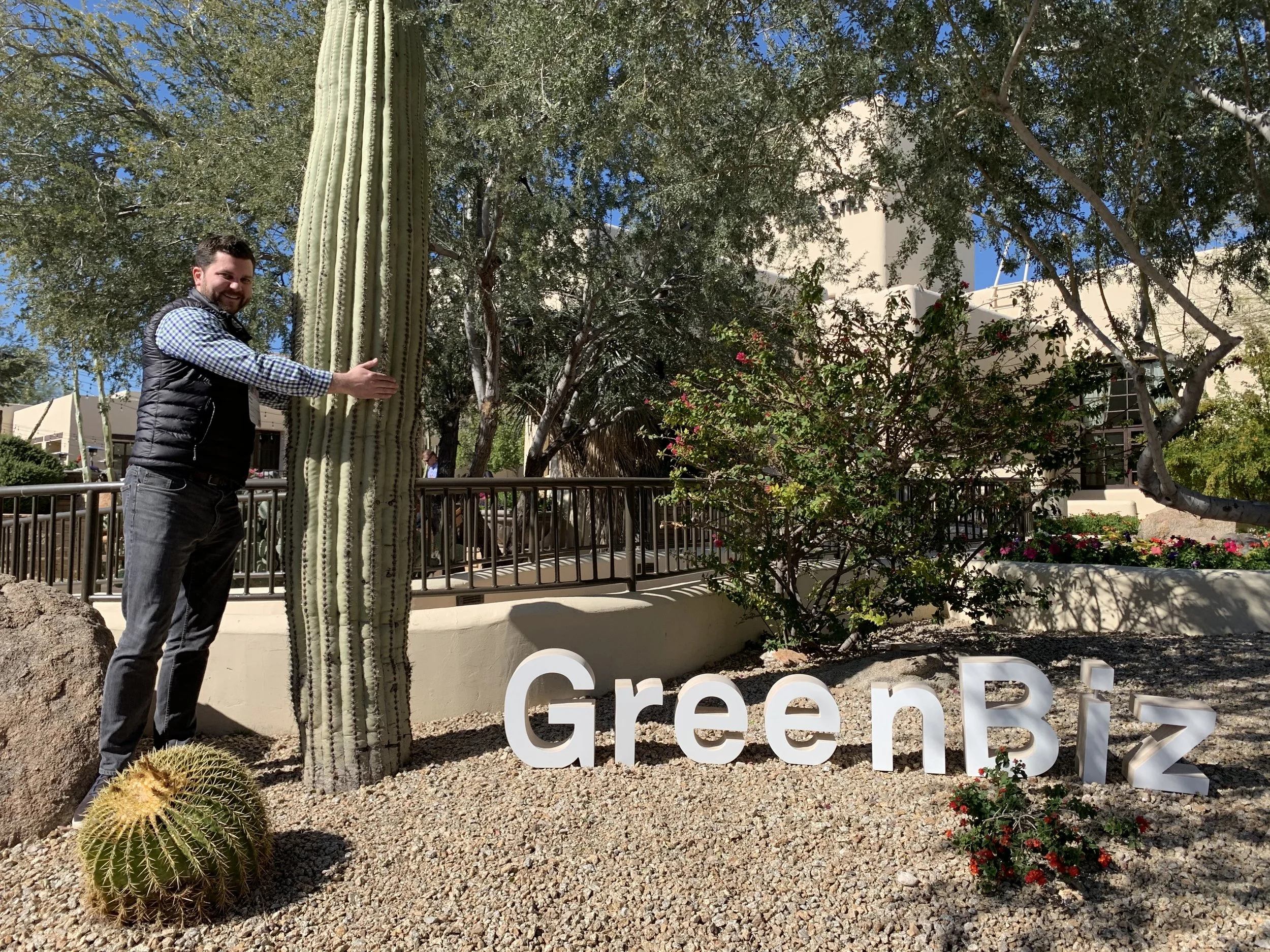
Ah, GreenBiz—the annual event that turns Phoenix (or, technically, Scottsdale) into the center of gravity for 2,500+ sustainability professionals every February. It’s also the only place I’ve ever quite literally hugged a cactus.
Next week, I’ll be heading to GreenBiz 26—my sixth time attending in as many years (2021 was virtual, thanks to the pandemic). I won’t be alone. A few thousand fellow travelers will descend on the Arizona desert for three days of keynotes, workshops, breakout sessions, and—let’s be honest—a lot of coffee- and cocktail-fueled conversations.
For many of us who return year after year, GreenBiz is more than a conference. It’s a convening of the sustainability community—a chance to reconnect with the people who remind us why this work matters. And in times like these, we could all use more of that.
That said, GreenBiz is a whirlwind. Whether it’s your first time or your fifteenth, here’s how to make the most of it.
1. Clarify why you’re there
Attending GreenBiz isn’t cheap, and your organization rightly expects some return on investment. But ROI looks different depending on who you are.
A corporate sustainability practitioner might be there to learn from peers, build internal credibility, or connect with partners.
A consultant might be focused on relationship-building with existing and potential clients and business development.
A student or early-career professional might be there to network and explore job opportunities.
A sustainability software platform might be there to build awareness of their offering and close deals.
Before you arrive, write down a few clear goals. Here are mine for GreenBiz 26:
Introduce myself to 25 new people
Nurture relationships with 50 existing connections
Learn 15 new things relevant to my work (sustainability communications, regulation, disclosure)
Execute a successful breakout session (75% full room, engaged audience)
Generate excitement about my upcoming book, Sustainability Storytelling
This might be my inner journalist talking, but I also like to come with questions:
What’s the general corporate sustainability vibe this year?
What topics are people excited—or anxious—about?
What sustainability communication challenges keep coming up?
How can Hower Impact help these people address all this?
But generally, my purpose is simple: to connect and engage with people. Yes, I have outcomes in mind—but I try not to show up thinking about them. I show up to connect and learn. I don’t sell. I share what I know and tell people what I believe, and I trust the rest to take care of itself eventually.
2. Make a plan, then throw it out
Dwight D. Eisenhower’s famous saying that “plans are worthless, but planning is everything” is sound advice for anyone attending GreenBiz 26. The conference runs from Monday morning through Thursday at noon. Even if you somehow get eight hours of sleep a night (you won’t), that’s less than 70 hours total. Time is scarce.
Start with the conference app. It’s genuinely useful—for the agenda, floor plan, attendee list, and even airport carpools.
I live and die by Google Calendar, so I block time for:
Speaking engagements
Sessions I care about
Networking events
1:1 meetings
Great conversations happen unexpectedly. You might miss a session because you’re deep in a hallway discussion—and that’s often the better trade. What isn’t okay is bailing on people you’ve committed to meeting because something shinier came along. That’s not a good look.
3. Attend sessions outside of your area of expertise
GreenBiz 26 is organized around eight tracks, all focused on practical, usable solutions:
Advancing Circular Systems
Comms with Confidence
Data and Disclosure
Decarbonize and Drawdown
Finance for the Transition
Managing Through Change
Regenerating Nature
Solving for Scope 3
Given my work, I naturally gravitate toward Comms with Confidence and Data and Disclosure. But I’d encourage you to intentionally attend sessions outside your expertise.
If you live in sustainability data all day, you might learn more from a communications or change-management session. And if you’re a comms nerd like me, you might benefit from a deep dive on Scope 3.
For example, a sustainability manager would benefit just as much as a communications director from attending the very cool and amazing breakout session (and I’m obviously not biased) on Wednesday at 1:30 p.m. called “Telling Compelling, Credible, and Compliant Sustainability Stories,” led by yours truly and featuring Daniel Strechay of PepsiCo, Jaycee Pribulsky of Apollo Global Management, and Jayni Hein of Covington & Burling LLP.
Roundtable lunches are especially valuable. These smaller, facilitated discussions often lead to more honest, practical conversations than formal sessions. I’m hosting one on Tuesday about aligning sustainability and government affairs—come join if you’re feeling brave.
You can’t see everything. Be strategic, and be curious.
4. Practice “netlearning” not networking
People go to GreenBiz to see—and be seen. There’s a lot of social proofing that would make Mean Girls blush.
I started attending these conferences as a nobody. Now, I’m occasionally a “somebody” who gets speaking slots and hallway high-fives. I got there through years of deliberate, authentic relationship-building.
My unsolicited advice: drop the word networking. Replace it with learning.
Everyone—from CSOs to interns—has something to teach you. You won’t vibe with everyone, and that’s okay. Show up curious, open, and human.
I approach this in two ways:
Proactive: Identify people you want to meet ahead of time and schedule short coffee or lunch check-ins.
Organic: Talk to people you sit next to in sessions. Strike up conversations in hallways. Follow the energy at happy hours.
Speaking of happy hours: don’t overbook yourself. I once scheduled five 15-minute meetings during a single reception. Chaos ensued. Evening events are better left open for organic connection.
This year, Trellis has built a new app with a “Recommended People” section that feels a lot like Tinder (thanks, guys, for making me relive my pre-married dating app trauma). You can “Show Interest” in people you’d like to meet and “Skip” people you’d like to, well, skip. I assume it’s the same old story—practitioners getting bombarded with “likes” while poor consultants like myself go ignored. (See how empty my “People Interested In You” queue is.)
Organic netlearning is anything but passive. You have to challenge yourself to balance catching up with people you know with meeting people you don’t. As your network grows, this gets harder—because every year there are more “must-sees,” and the week does not get any longer.
You’ll often learn more from these candid exchanges than from the official sessions. On stage, speakers stick to talking points. In the hallways and over coffee, they don’t. What you hear there can be very different from what’s said on the main stage.
If you’re shy or don’t know anyone, please come say hi to me. I’m tall, hard to miss, and genuinely love meeting new people. I remember what it feels like to be the odd one out. And if you’ve committed yourself to the work of sustainability, I already consider you a friend.
5. Dress for success
I’ve worn many questionable outfits to conferences over the years. At 25, I once showed up to Sustainable Brands in a full suit, desperate to be taken seriously. I looked exactly like someone trying too hard—which I was.
GreenBiz style reflects the community: corporate, but not corporate-y.
For men, think business casual:
Button-downs and nice jeans or slacks
Short sleeves are fine—it’s the desert
Comfortable shoes are non-negotiable
I asked my friend and fellow sustainability communicator Mica Crouse for advice for women:
“Smart casual—polished but not overly formal. Comfortable shoes for lots of walking, not heels. A casual dress, jumpsuit, or pants with a nice top. And bring layers—it’s chilly in the morning and warms up fast.”
Solid advice.
One more thing: if you see a guy wearing a cheese hat, don’t be alarmed. That’s my friend Stephen Ritz of Green Bronx Machine. Say hi. He’s awesome.
6. Take care of yourself (within reason)
Every year, I pack my running shoes with the aspiration of actually using them—only for them to remain buried and forgotten in my suitcase.
According to the program, some impressive people like Trellis’ Katie Ryan, Okata’s Michael Chen, and climate comedian Stuart Goldsmith have scheduled a Sunrise Desert Run at 6:15 a.m. on Tuesday. Bless their hearts. I will not be joining them.
Late nights and early mornings make it hard to find the time or energy to work out. If you’re an active person, don’t worry—you’ll do enough walking throughout the week to get your steps in. And if exercise is important to you, the options are there.
As someone married to a registered dietitian, I’m now more ashamed than ever of my eating habits during these conferences.
GreenBiz typically provides breakfast and lunch. Pro tip: try to get into one of the sponsored meals—they’re usually higher quality. While the food is healthy-ish, I find it easier to treat the week as a wash. Dinners aren’t provided, which means sponsored dinners at decadent restaurants… plus whatever liquid libations you may or may not partake in.
If healthy eating is important to you, don’t worry—the options are there.
Side note: one year, GreenBiz tried to go fully vegan, which culminated in an unfortunate tofu chicken breast during a Tuesday luncheon. We don’t talk about that.
If you’re looking to do some more intentional self-care this year, I recommend checking out Reboot, a one-day, nature-inspired leadership retreat designed to help women working in sustainability develop “personal sustainability strategies” for health, well-being, and resilience.
7. Socialize without overdoing it
Let’s not mince words: some of the best netlearning happens over a beer or a glass of wine. If you only attend daytime sessions and disappear at night, you’ll miss a lot of the real value of GreenBiz 26.
As my friend Vijay Sudan put it:
“Don’t miss out on the social opportunities that exist outside of the official conference programming. While the content may be valuable, you haven’t spent the time and expense to travel just to listen to a presentation. Much of the value of attending conferences comes from the personal interactions that take place.”
He’s right. Early-morning yoga, impromptu hikes, late nights at the hotel bar—these are often where the most honest conversations and meaningful relationships form.
Case in point: Vijay and I first met at a conference happy hour years ago. He came to my wedding last year.
That said, don’t be dumb. Pace yourself. Hydrate. Conferences have a way of encouraging poor decisions, and you don’t want to be that person everyone whispers about the next day.
And if you don’t drink, that’s completely fine. You can still enjoy—and benefit from—these evening events without alcohol.
GreenBiz hosts on-site happy hours Tuesday and Wednesday, plus an “After Dark” party Wednesday night. On Tuesday evening, I’ll also be co-hosting Afterglow, a gathering at a nearby brewery benefiting ClimateVoice (where I serve on the advisory board). It’s a small event with limited capacity, but worth trying to snag a spot.
Well there you have it. That’s everything I’ve learned over the years to have a successful time at GreenBiz. But the most important thing to do is have fun. As sustainability professionals, our work is hard—especially now—and this event can be just what the doctor ordered to refill your cup.
Safe travels and see you in the desert.